
From Order to Recoat: How to Plan Your Bakery Pan Lifecycle

I spend my days with bakeries on orders, deliveries and recoat schedules, and one pattern shows up again and again. The bakeries that run smoothly plan the whole life of their pans. The ones that struggle only think about pans when product starts sticking. This guide walks through the bakery pan lifecycle from the first order to the next recoat, with practical steps for each stage.
What is the bakery pan lifecycle?
A pan does not simply wear out. It moves through a series of stages, and each one is a chance to extend its working life or to lose time and money:
Specify and order the pan.
Put it into service and keep track of it.
Handle, clean and maintain it.
Refurbish it when its condition calls for it.
Recoat it on a planned schedule, then repeat.
Stage 1: How do you order pans that suit your line?
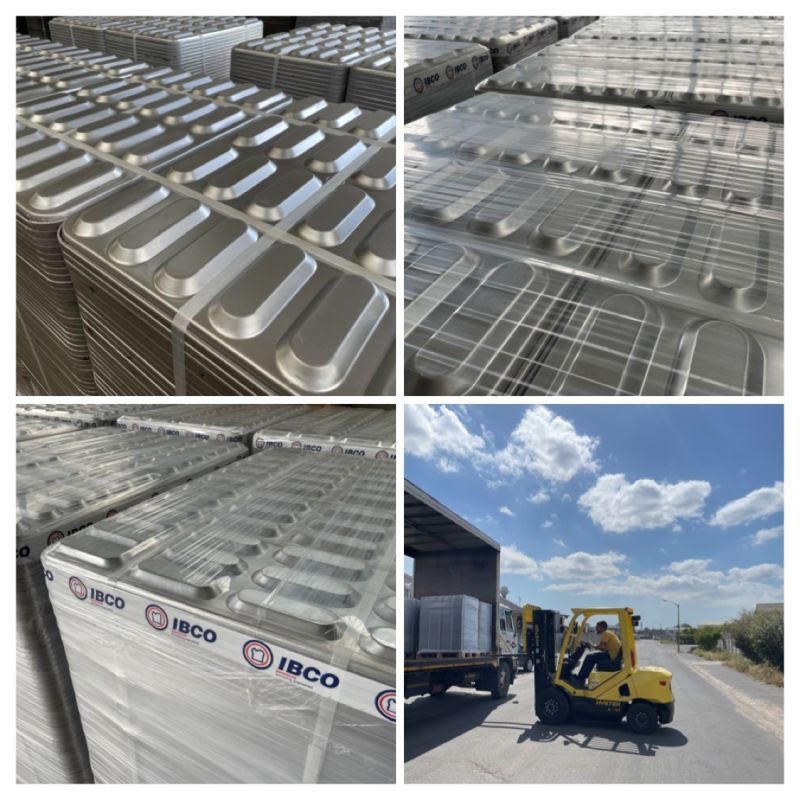
Start with what you bake. IBCO designs and manufactures bread pans, bun pans, Auto-Bake trays, and confectionery, muffin and cake trays, and our in-house tool room can produce specialty designs for unique products. The more clearly you describe your product, your line and your production volumes, the better the pan will fit.
Tell us your timing early. Because tooling and coating are done in-house at our Parow plant, a request does not wait in a subcontractor's queue, but it still helps to line up delivery with your production plan.
Stage 2: Do you know how many pans you have in circulation?
Ask most operations teams and you get an estimate rather than a number. Pans move between lines, get pulled for maintenance, go missing between sites, or quietly wear out. TracePan gives each pan a digital identity, so you can see where it is, how long it has been in service, and when it is due for maintenance or refurbishment.
That changes how maintenance is planned. Instead of pulling pans on a fixed schedule, you act on actual usage data. We cover this in more detail in Why Tracking Your Bakeware Fleet Is Worth the Effort.
Stage 3: How do you keep pans in good condition between recoats?
Most early pan damage comes from day-to-day handling, so small habits matter:
Handle and stack pans in a way that avoids dents and warping.
Clean pans using methods suited to the coating, so build-up is removed without wearing the surface.
Report damage when you see it, rather than when a batch comes out wrong.
Watch for product sticking, uneven release across a set, or dulling in high-contact areas. These are usually the first signs the coating is nearing the end of its life.
Stage 4: When is refurbishment a better choice than replacement?
If the base pan is still sound, refurbishment is often the more practical option. At IBCO it starts with straightening, using purpose-built presses and tailor-made tool dies to correct dents and warping. A chemical-free cleaning process then removes the old coating along with built-up oil, grease and carbon. Where needed, an anti-corrosion layer is applied, broken welds are repaired, and the pan is recoated and cured in high-temperature tunnel ovens before it returns to you as a complete turnkey service.
For bakeries, the practical benefits are less downtime from bakeware failures, less spend on secondary release agents, better and more consistent heat transfer, and less waste. Read the full case in Getting More Life Out of Your Bakeware: A Practical Case for Refurbishment.
Stage 5: How do you schedule recoating without interrupting production?
The smoothest recoats are the ones planned well ahead. We already run an annual recoat forecast with established customers, which lets us line up collection, recoating and delivery with your production calendar instead of reacting to an urgent request. If you have more than one line or site, rotating sets through recoating keeps pans in circulation while others are away.
What does a simple pan lifecycle checklist look like?
Count your pans, by line and by site.
Record the condition of each set and the coating on it.
Decide which sets are due for refurbishment or recoating in the next budget period.
Agree a recoat forecast and collection dates with your IBCO contact.
Review the data from TracePan regularly and adjust the plan.
More from the IBCO blog
Why Tracking Your Bakeware Fleet Is Worth the Effort: how pan tracking improves maintenance planning and cuts hidden costs.
Getting More Life Out of Your Bakeware: A Practical Case for Refurbishment: how refurbishment works and why it often suits high-volume bakeries.
Plan your pan lifecycle with IBCO
If you would like help mapping your pan lifecycle, from ordering to tracking to recoat forecasting, get in touch. Visit our contact page, email sales@ibco.co.za, or call +27 21 951 6663, and tell us about your lines.
We help bakeries bake better.

Comments