
Recoat or Replace? How to Work Out the Real Cost of Your Bakery Pans

Every plant bakery reaches the same point. Product is starting to stick, the coating looks tired, and someone in finance asks whether to recoat the pans or buy a new set. Both answers can be right. The way to decide is to look at cost per release over the life of the pan, not just the figure on the quote in front of you.
Why is recoat or replace a budget question as well as a pan question?
New bakeware is capital expenditure, usually tied to an annual budget cycle. Recoating is operating expenditure, triggered by the condition of the pan. They sit in different budget lines and often need different people to approve them: production or operations, technical and quality, finance, and senior management at larger bakeries.
That split is why the decision stalls. Operations sees a pan problem, finance sees a cost comparison, and each side is looking at a different number.
What are the signs a pan needs attention?
Pans usually tell you before they fail. The signs we hear described most often are:
Product sticking where it did not before.
Release that is inconsistent across a set, rather than evenly worn.
Coating that is dulling or thinning in high-contact areas.
Dents, warping or broken welds in the pan itself.
If the base pan is sound, a worn coating is usually a recoating job. If the pan is damaged, straightening and weld repair can often bring it back first. Our colleague Carmen explains that process in Getting More Life Out of Your Bakeware: A Practical Case for Refurbishment.
How do you compare recoating with replacement?
Use cost per release. For each option, add up everything it costs you, then divide by the releases you expect from it:
Cost per release = (price of the work + line downtime + release agent spend) ÷ releases achieved before the next intervention
Each part of that sum is worth checking:
Price of the work. The quote for a recoat or for a new set, including freight.
Downtime. How long pans are out of circulation, and whether you have the spare sets to cover it.
Release agent spend. IBCOAT non-stick coatings are designed to reduce or eliminate the need for pan release oil, so oil usage belongs in the comparison.
Set size. Plant bakeries often run somewhere between 1,600 and 2,700 pans per set, so a small difference per pan multiplies quickly across a line.
Lead time. A cheaper option that arrives after your production window can cost more than a dearer one that arrives on time.
What data do you need to make the comparison?
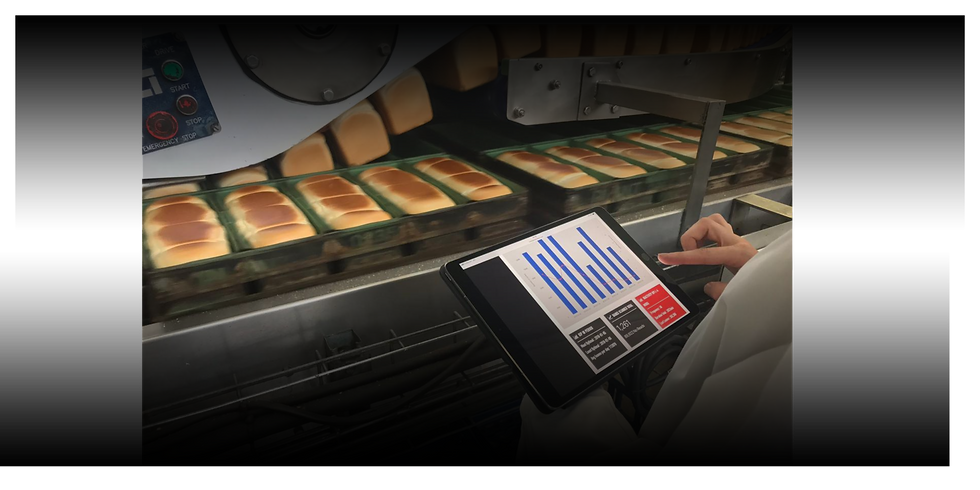
Most bakeries estimate. The better route is to use your own numbers. TracePan records release counts, time in service, coating life and recoat timing for each pan, so you can compare options on what your pans actually do rather than on a spec sheet. On customer floors, TracePan has recorded up to 6x more releases than silicone glaze. See how it works on the TracePan page, or read why bakeries are counting their fleets in Why Tracking Your Bakeware Fleet Is Worth the Effort.
When should you plan a recoat or replacement?
Plan for your next budget cycle, not for the day the pans fail. Because replacement is capital expenditure, the time to raise it is before the budget is set. Because recoating is triggered by condition, the way to avoid surprises is a forecast. We already run an annual recoat forecast with established customers, so recoating becomes a predictable line in the budget rather than an urgent request.
What should you have ready before you ask for a quote?
How many pans are in the set, and how many sets you run.
The current coating and the release problems you are seeing.
Any visible damage, such as dents, warping or weld failures.
Your next budget date and the production window you need to hit.
Talk to IBCO about your pan fleet
Send us your pan count and current condition and we will help you build the recoat or replace comparison for your next budget round. Visit our contact page, email sales@ibco.co.za, or call +27 21 951 6663.

Comments